
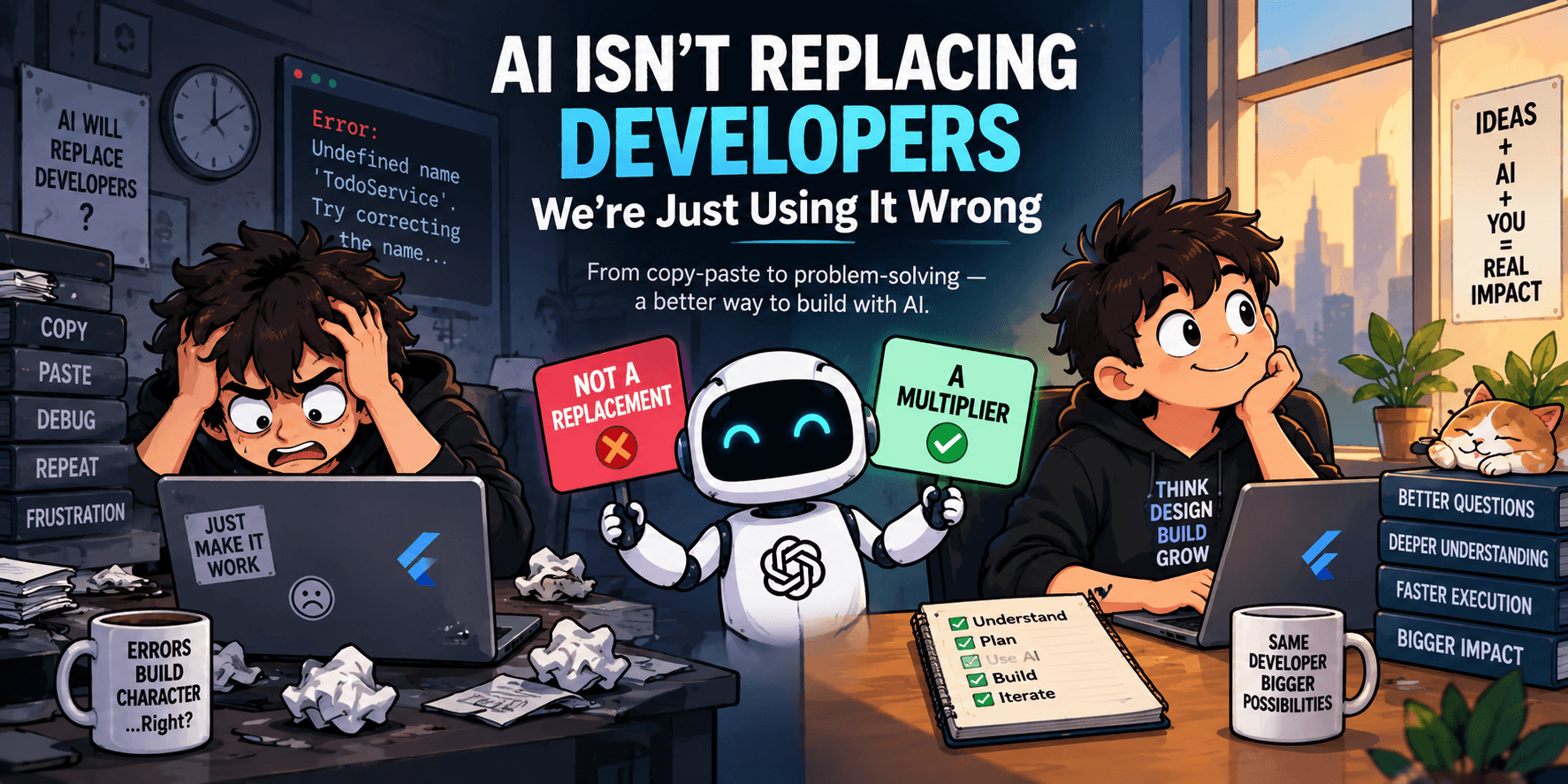
The biggest misunderstanding about AI in software development isn't that AI will replace developers. It's that many developers are still using AI like a faster version of Google or Stack Overflow.
In 2026, the question shouldn't be “How do I get AI to write this code?” It should be “How can I use AI to become better at solving engineering problems?”
There is an interesting difference between how a junior developer should use AI and how an experienced developer should use it.
For Juniors: Don't Outsource Your Learning
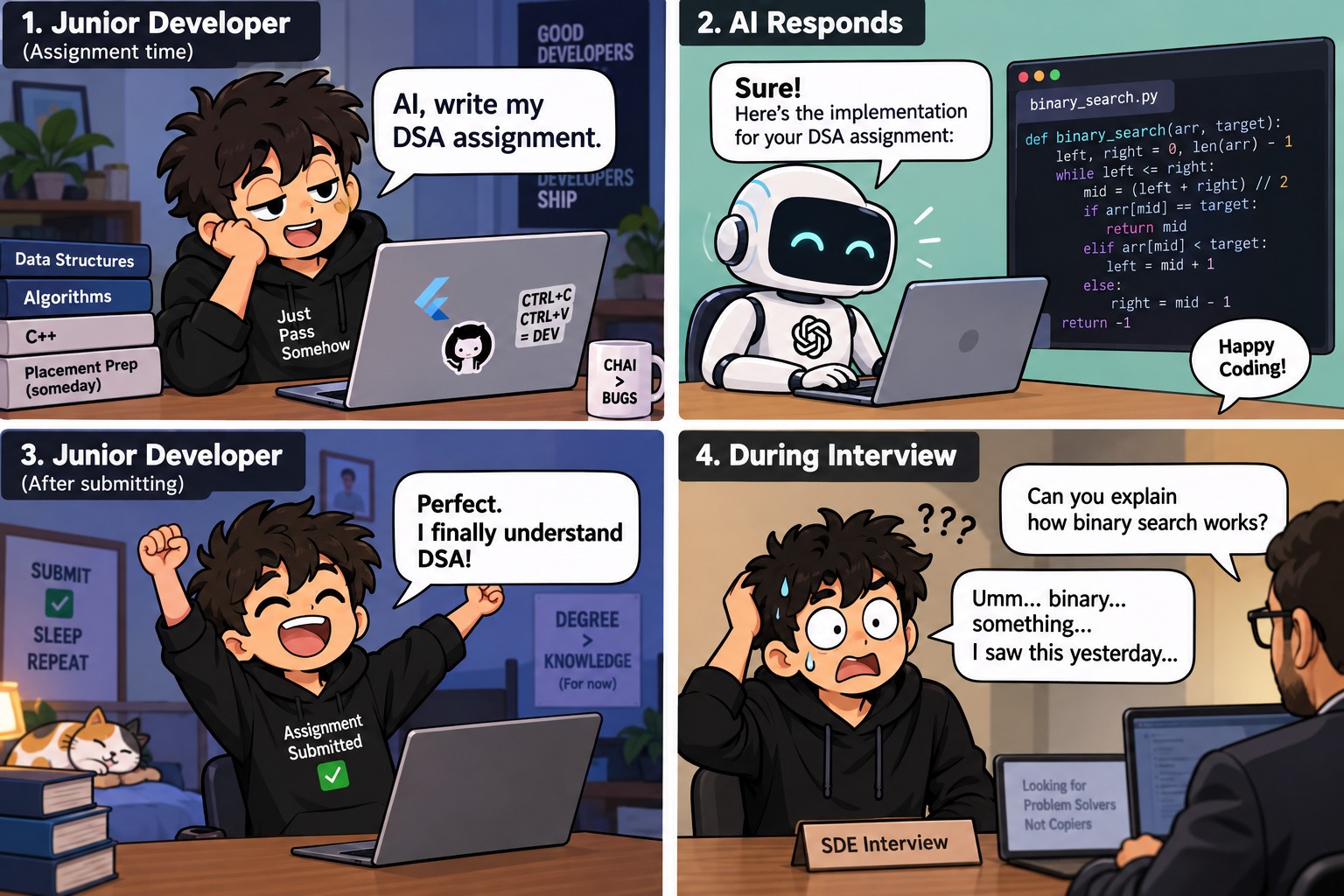
For students and fresh graduates entering software development, AI can be one of the best learning tools ever created. But it can also become one of the easiest ways to stop learning.
Imagine a student learning data structures. They encounter binary search and immediately ask an AI to implement it. The AI produces a perfect implementation in seconds. The student copies it, runs the program, and moves forward.
Technically, the problem is solved. Educationally, almost nothing was learned.
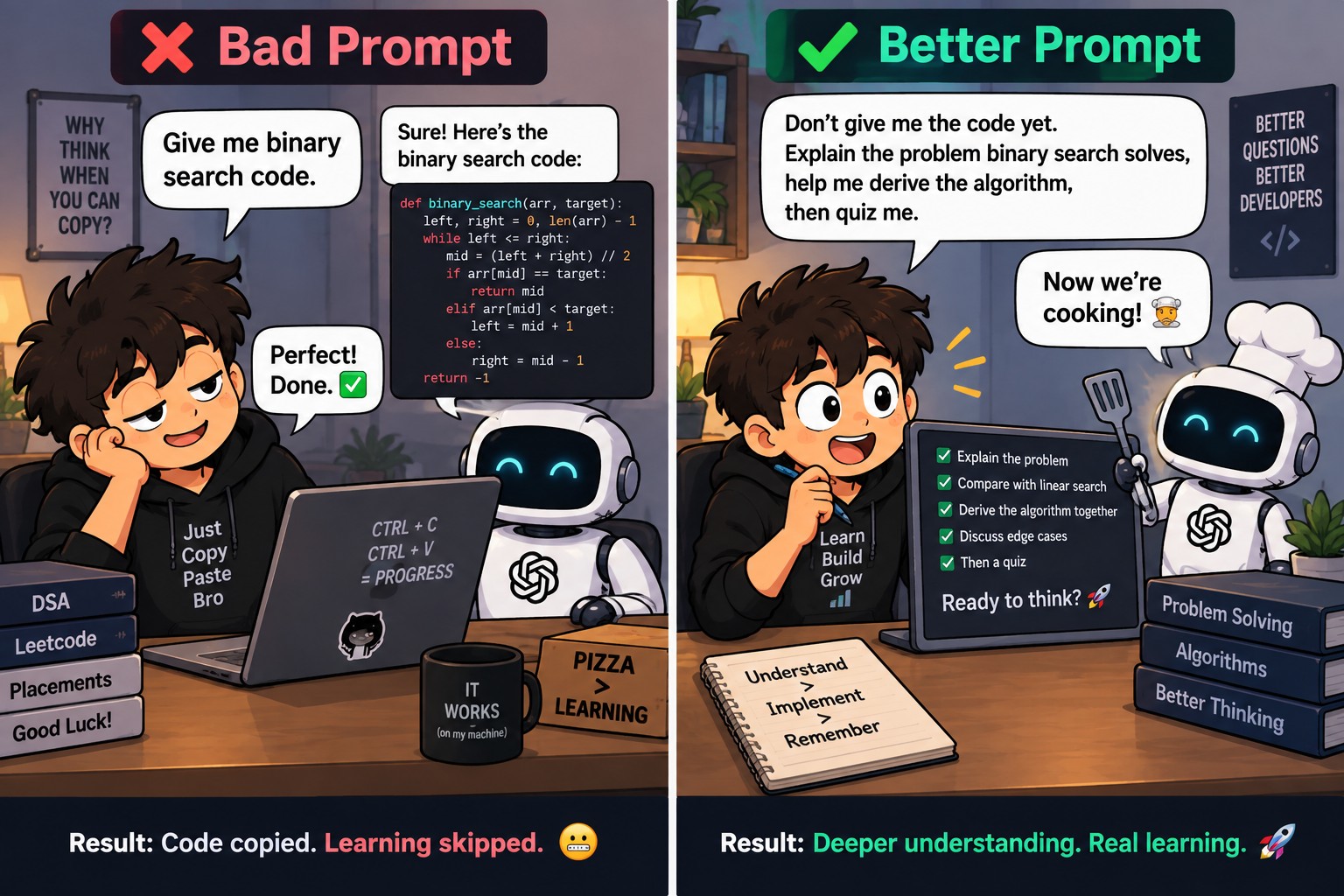
A much better approach would be to ask AI why binary search exists, what problem it solves, what limitations a linear search has, and how the binary-search approach can be derived from those limitations.
Now AI isn't doing the learning for you. It's helping you learn faster.
For Experienced Developers: Stop Asking AI for Functions
The challenge is different for developers with several years of experience.
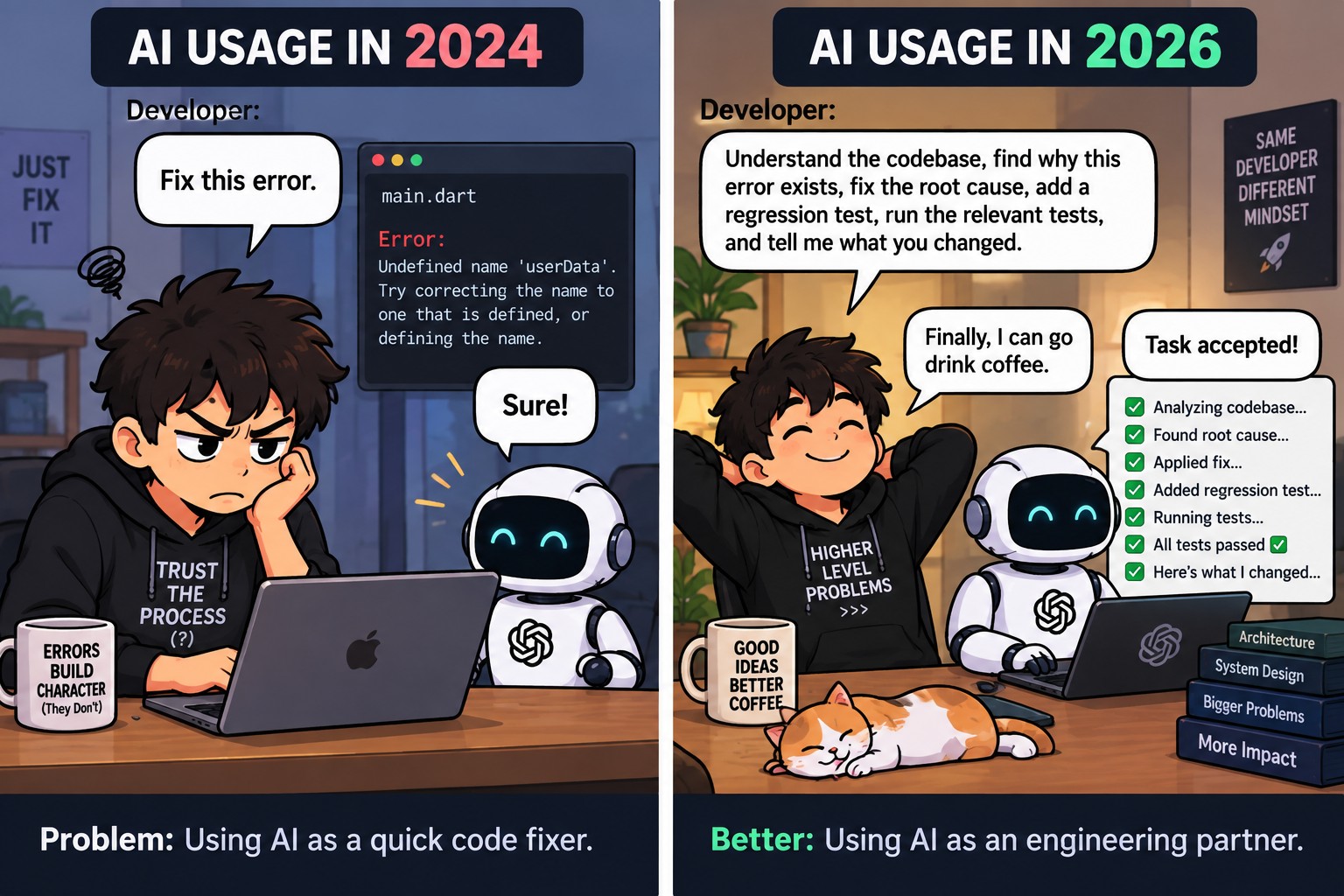
Many experienced developers have adopted AI, but are still using it primarily for small coding tasks: fixing errors, generating widgets, writing boilerplate, or creating individual functions.
Those use cases are useful.
But they're only the beginning.
Instead of asking:
“Create this Flutter screen.”
An experienced developer can give AI a much larger engineering objective:
“Understand this Flutter repository, analyze the existing architecture, propose the required changes, implement them following the project's conventions, write tests, run the test suite, investigate failures, and summarize the changes.”
That's a fundamentally different relationship with AI.
You're not asking AI:
“Can you write this code?”
You're saying:
“Here is the outcome I need. Help me achieve it.”
This Is Where Agentic Workflows Come In
This is where the idea of an agentic workflow becomes interesting.
The developer moves from telling AI how to write the code toward defining what outcome needs to be achieved.
AI can then participate in multiple steps: understanding the repository, planning, implementing, testing, debugging, and reporting.
But there is an important distinction.
The AI executes. The developer decides.
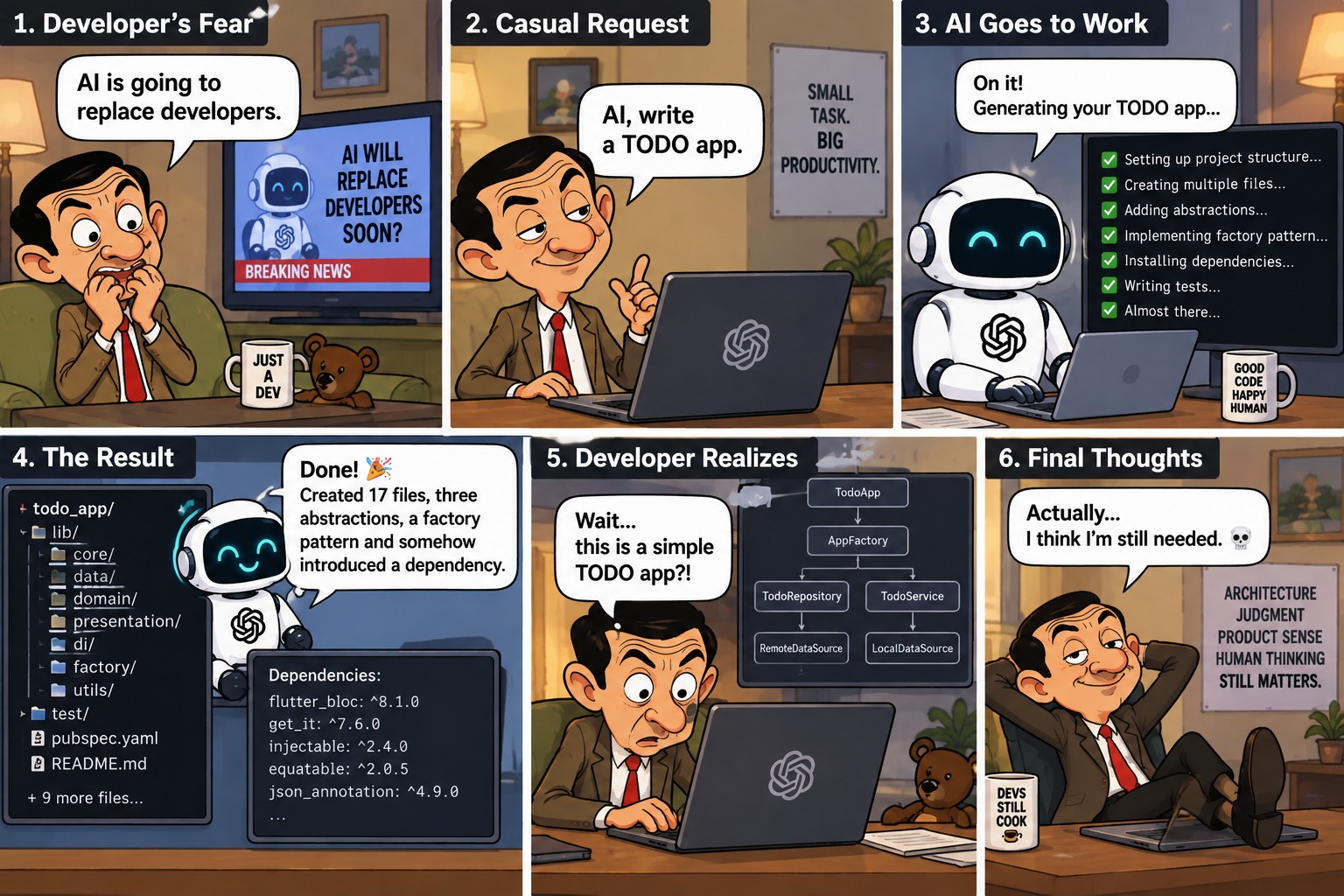
Architecture, product trade-offs, security, maintainability, and engineering judgment still belong to the developer.
AI shouldn't become your autopilot. It should become your engineering multiplier.
The Skill That Matters in 2026
This is why I don't think AI is making developers irrelevant. It is changing where a developer's value comes from.
For a junior developer, the opportunity is to learn faster without giving up the fundamentals.
For an experienced developer, the opportunity is to delegate more execution without delegating engineering judgment.
The important skill isn't simply prompt engineering.
It is task engineering—knowing how to provide AI with the right context, objective, constraints, and definition of success.
The developers who thrive in the AI era won't necessarily be the ones who write the most code.
They'll be the ones who know what should be built, why it should be built, and how to make AI help them build it better.
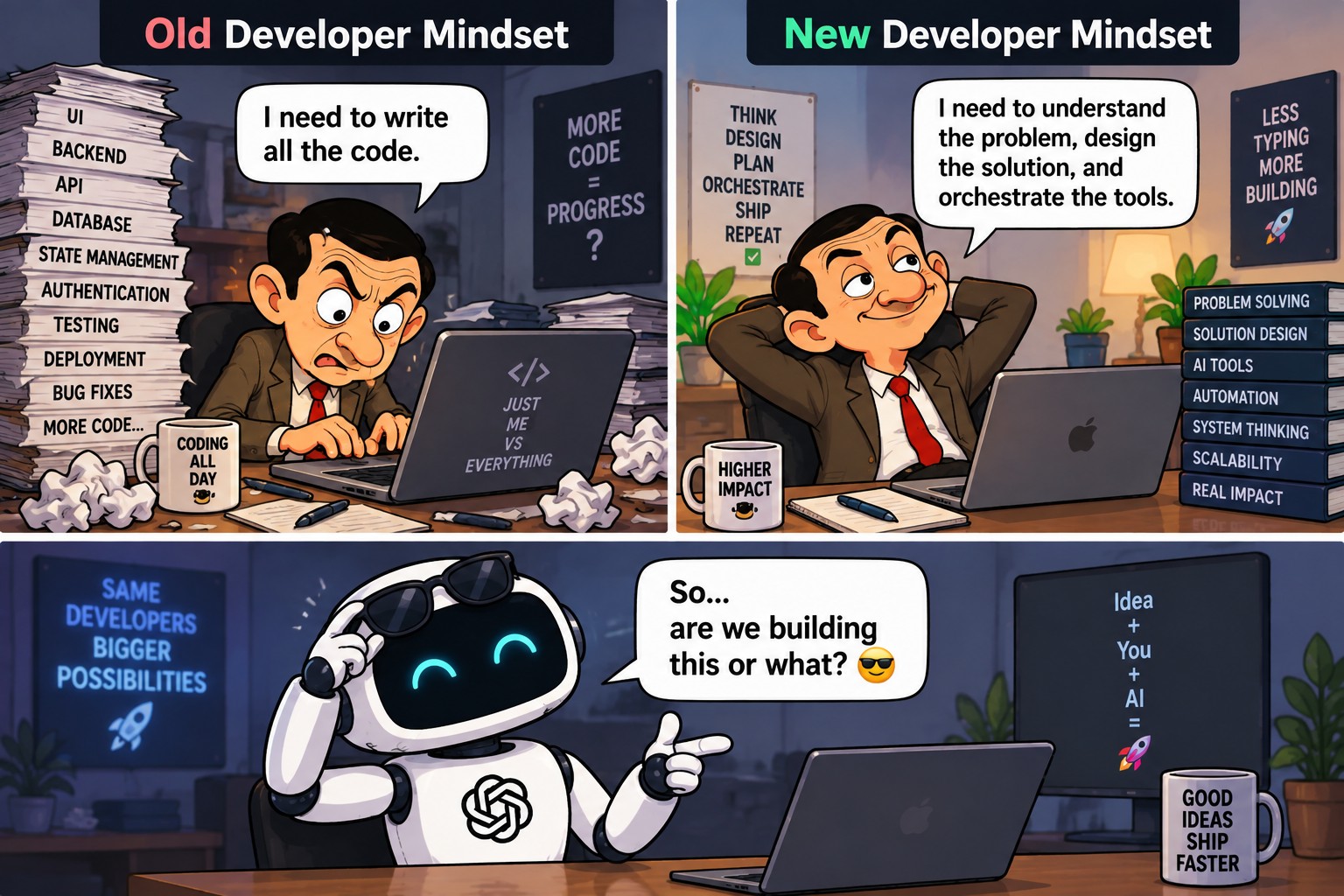
And perhaps that's the biggest shift AI is bringing to software development.
AI shouldn't replace your thinking.
It should multiply it.